Forerunners of Fusion
Bunny Brunel and the High-Voltage Era of The Tony Williams Lifetime (1979–1980)
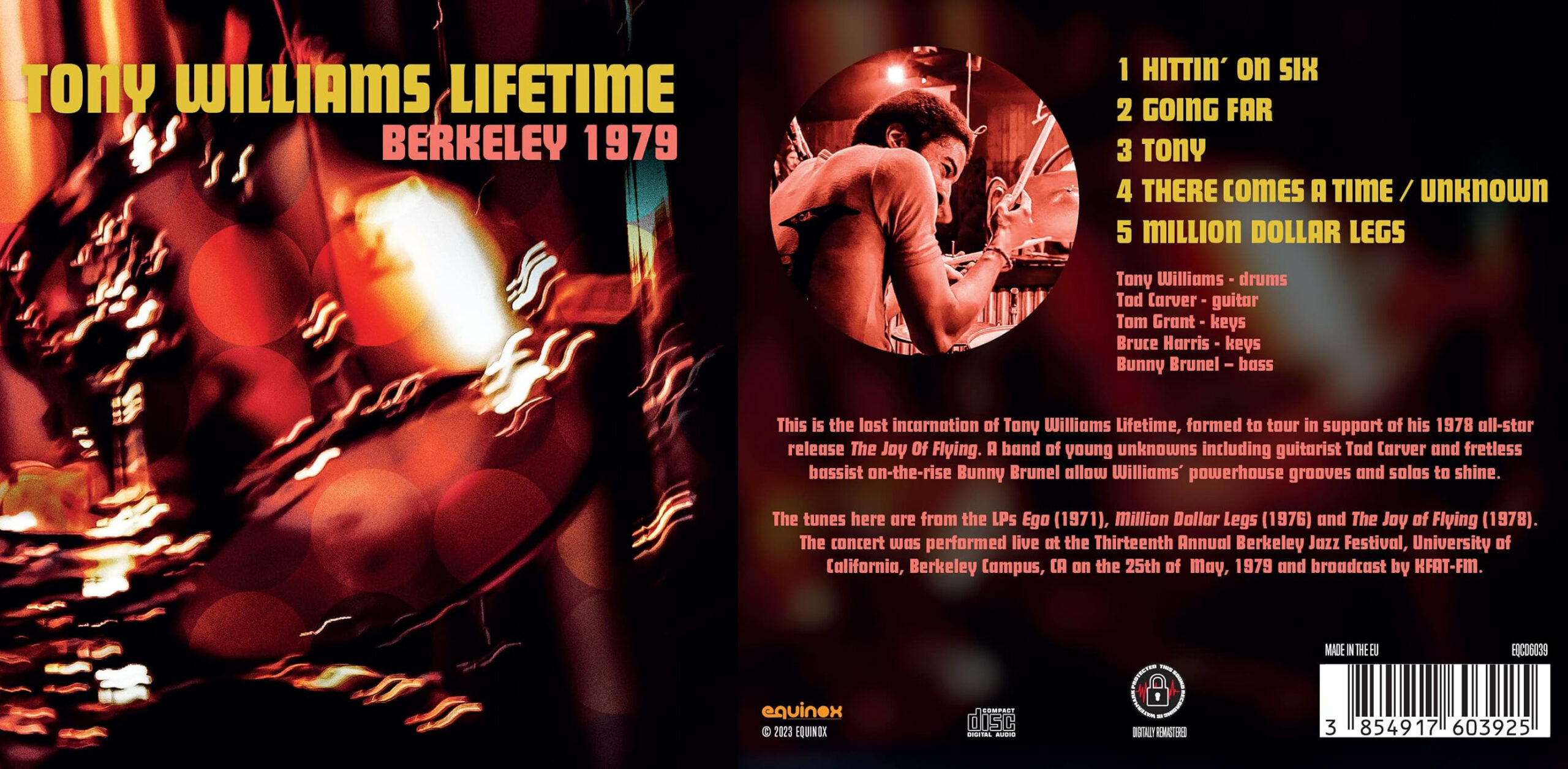
The collaboration between Bunny Brunel and Tony Williams stands as one of the most virtuosic chapters in the history of jazz-rock fusion. Forged during a period of intense musical evolution, their partnership defined the sound of the late 1970s and early 1980s, bridging the gap between high-volume “shred” fusion and a more sophisticated, melodic approach.
The Genesis: 1979 and The Joy of Flying
The professional bond began in 1979 when Tony Williams recruited the young French bassist to join a new iteration of The Tony Williams Lifetime. Brunel brought a unique technical facility to the group, seamlessly switching between fretless electric and upright bass. This initial era was marked by high-energy performances at major international festivals, including the Berkeley Jazz Festival (May 1979), the North Sea Jazz Festival (July 1979), and a homecoming performance at the Juan-les-Pins Jazz Festival in Antibes, France.
1980: The Quintet and the Peak of Fusion
By 1980, the collaboration reached its creative zenith. The Tony Williams Lifetime evolved into a powerhouse quintet featuring Bunny Brunel (Bass), Tony Williams (Drums), Tom Grant (Keyboards), Todd Carver (Guitar), and Bruce (Bob) Harris (Keyboards). This specific lineup is legendary for its experimental arrangements and aggressive interplay. A landmark moment from this year was the performance at the Pori Jazz Festival in Finland. The live recording—captured by the BBC—remains a “holy grail” for fusion enthusiasts, particularly for its definitive version of “Proto Cosmos.”
Technical Innovation: Designing the Electric Upright
A critical aspect of this era was Bunny’s role as an instrument designer. To compete with the sheer volume of Williams’ drumming, Bunny utilized an early prototype electric upright bass that he designed and was manufactured for a time by Valley Arts Guitars. This instrument served as the structural ancestor to his later BBEUB Signature Series. These early designs allowed Bunny to bring classical conservatory bowing techniques to the fusion stage without feedback, proving that the electric upright could be a viable lead instrument in a high-output setting.
The Studio Legacy: Ivanhoe
Though their consistent live partnership concluded as Williams transitioned toward a trio format in late 1980, their musical respect continued in the studio. This culminated in the recording sessions for Bunny Brunel’s solo masterpiece, Ivanhoe (released 1983/84). Tony Williams’ signature drumming is the engine behind key tracks like the title song “Ivanhoe” and the propulsive “Nani.” These recordings are historically significant as they place Williams and Brunel alongside titans like Chick Corea, Herbie Hancock, and Stanley Clarke.
Personal Reflection: “My Best Friend”
Looking back on their global tours, Bunny has frequently shared his deep affection for his late collaborator. Having first met when Stanley Clarke invited Bunny to guest at a rehearsal, the two formed an immediate musical and personal bond. Bunny simply describes Tony as “My best friend I had the pleasure to play with and tour all around the world” and his “friend forever.”
Chronology of the Brunel-Williams Years (1979–1983)
- April 1979: U.S. Tour stops include the Ford Auditorium in Detroit.
- May 1979: Landmark performance at the Berkeley Jazz Festival, CA.
- July 1979: Major European Tour including North Sea Jazz (Netherlands) and Juan-les-Pins (France).
- Late 1979: Iconic “Live Under the Sky” festival in Tokyo, Japan.
- 1980: Global touring at legendary venues like The Bottom Line in New York City.
- Mid-1980: Landmark BBC live recording at Pori Jazz, Finland.
- 1982/83: Studio sessions and release of Ivanhoe featuring Tony Williams.
Select Collaborative Discography
- “Ivanhoe” & “Nani”: Studio recordings from Ivanhoe (1983).
- “Proto Cosmos”: Live at Pori Jazz (1980).
- “Wildlife” & “Hip Skip”: Live in France (1979).
Author’s Note for Researchers & Journalists:
It is a critical historical distinction that—outside of Bunny Brunel’s solo recordings like Ivanhoe—the professional collaboration between Brunel and Tony Williams resided exclusively within The Tony Williams Lifetime (1979–1980). While both artists remained prominent in the global jazz-fusion circuit until Williams’ passing in 1997, they did not form other official “side projects” or join each other’s subsequent regular touring bands. This two-year window represents their primary concentrated era of live and recorded partnership.