Bunny Brunel’s Work in Film
Collaborations with Clint Eastwood, Henry Mancini, and Herbie Hancock
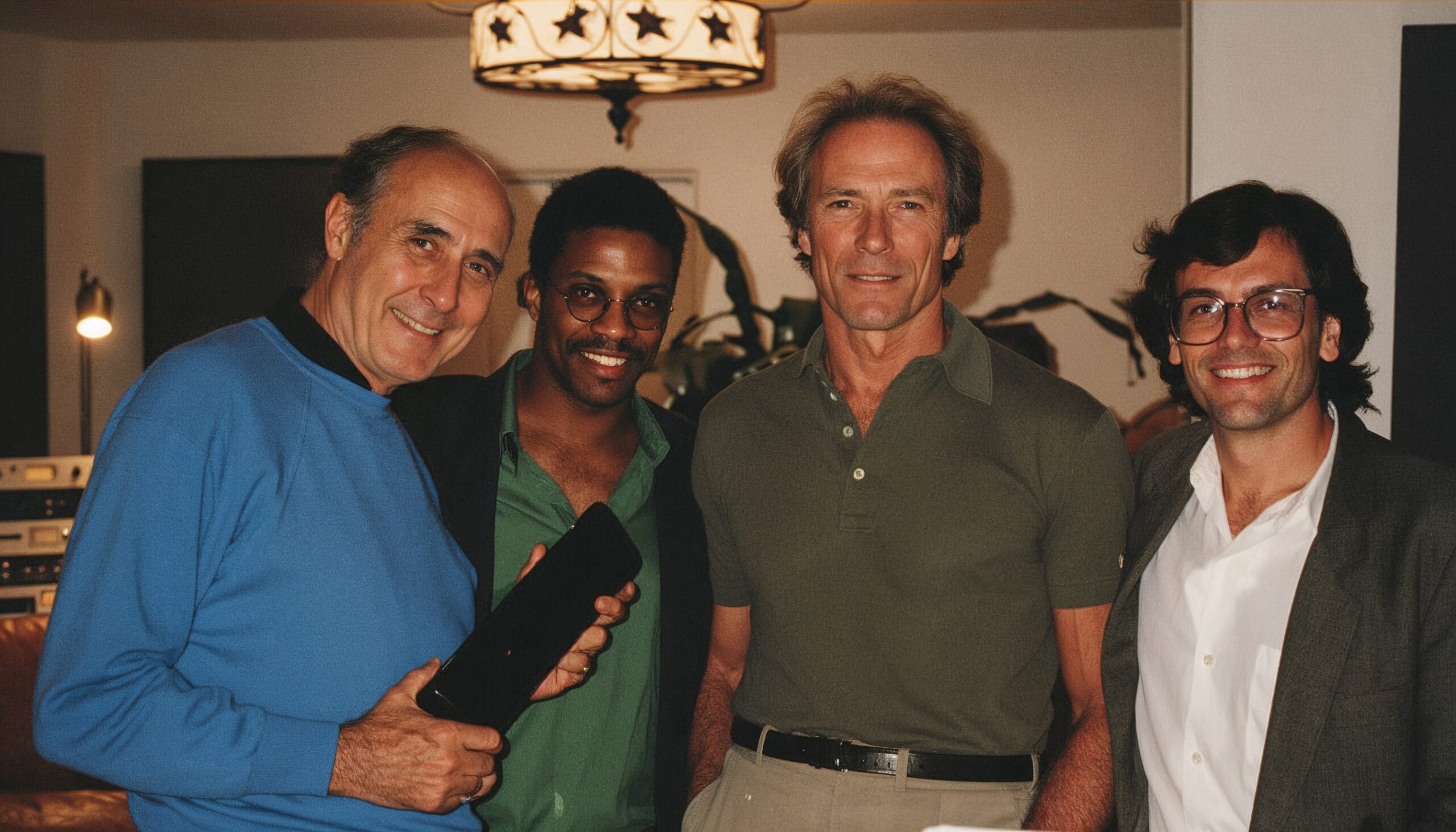
There are moments in music history that never announce themselves. They are not marketed, not framed as milestones, and often not even remembered by the people who lived them. They exist instead in photographs, in liner notes, in the quiet space between collaborators who understood—without needing to say it—that they were building something lasting.
What emerges from this particular convergence is not simply a list of names, but a rare alignment of minds: Clint Eastwood, Henry Mancini, Herbie Hancock, and at the center—often uncredited in the larger narrative—Bunny Brunel.
This was not a session. It was a summit.
The Film & Fusion Connection
They came from different worlds—Hollywood scoring stages, jazz clubs, orchestral halls—but they shared one obsession: melody as storytelling. Not technical display. Not genre. Story.
And when that story required translation—when a theme needed to become something deeper, something cinematic—it was Bunny Brunel they called.
Clint Eastwood: The Western Melodist
Unforgiven by Clint Eastwood
Clint Eastwood has always approached film scoring like a filmmaker: with restraint, with space, with an understanding that what is not played is just as important as what is. His melodies often carry a loneliness—open, unresolved, human.
That sensibility found its perfect counterpart in Brunel.
For Unforgiven, Eastwood composed the core of Claudia’s Theme, a piece built on emotional fragility. But it was Brunel who helped shape its interior life—arranging and performing the fretless bass lines that hover beneath the melody like a memory that refuses to fade. The bass does not accompany; it breathes.
Their collaboration extended into The Bridges of Madison County, where Brunel’s tone—subtle, lyrical, and deeply human—became part of the film’s emotional architecture. His playing does not announce itself, yet without it, the emotional weight shifts.
This was not embellishment. It was translation.
Henry Mancini: The Final Score
Son of the Pink Panther Composed by Henry Mancini
If Eastwood represented restraint, Henry Mancini embodied elegance. His scores defined sophistication in film music, balancing orchestral richness with melodic clarity.
By the early 1990s, Mancini was looking forward—toward a sound that could honor his legacy while speaking to a new era. For that, he needed a musician who could move fluently between classical structure and modern expression.
He chose Brunel.
On Son of the Pink Panther—Mancini’s final film score—Brunel played a critical role in reshaping the sonic identity of an iconic franchise. His approach to the bass was not supportive but conversational. He treated it as a lead voice, capable of wit, nuance, and narrative presence.
Mancini recognized something essential: Brunel’s classical grounding allowed him to engage not just as a performer, but as a collaborator who understood the architecture of the music itself.
This was not simply a passing of the torch. It was a closing statement—crafted with intention.
Herbie Hancock: The Rhythmic Bridge
Bridges of Madison County Starring Clint Eastwood and Meryl Streep
In any gathering of this magnitude, there is always a figure who connects the worlds in motion. In this case, it was Herbie Hancock.
By the early 1990s, Hancock occupied a unique position in music. He was at once a pioneer of jazz innovation and a respected voice in film scoring, having collaborated with Eastwood on Bird. He understood both the technical demands of jazz and the emotional demands of cinema.
His presence in these sessions was not incidental.
Hancock functioned as a kind of internal compass—someone who ensured that complexity never overwhelmed clarity, that authenticity remained intact. Whether consulting, performing, or simply contributing perspective, he represented the standard against which musical integrity was measured.
If Brunel was the translator, Hancock was the calibrator.
The Mentorship: Kyle Eastwood
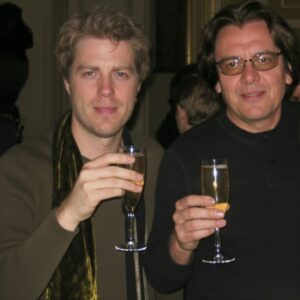
Bunny Brunel with Kyle Eastwood
No account of this circle is complete without Kyle Eastwood.
An accomplished bassist and composer in his own right, Kyle’s connection to Brunel extends beyond collaboration—it is rooted in mentorship. Studying under Brunel, he developed a refined technique and a deep understanding of the fretless voice that would later define his own work in film scoring.
This relationship transformed professional proximity into creative continuity.
Brunel’s involvement in Eastwood’s film projects was not merely situational—it was relational. It existed within a family dynamic built on trust, respect, and shared artistic values. In mentoring Kyle, Brunel ensured that his approach to melody, tone, and musical storytelling would not simply exist in recordings, but evolve across generations.
A Legacy of Mutual Respect
What unites these collaborations is not genre, nor even era. It is respect—for melody, for space, for the discipline required to say more with less.
Bunny Brunel was never just a bassist in these rooms. He was the one entrusted with meaning. The one called upon to take a skeletal idea and give it emotional dimension. The one who understood that music, at its highest level, is not about performance—it is about presence.
He moved between worlds—jazz, film, orchestration—not as an outsider, but as a necessary voice within each.
And perhaps most telling of all: he did this so seamlessly that even he, at times, forgets the extent of what he contributed.
That may be the clearest definition of a true architect—not the one who seeks recognition, but the one whose work becomes inseparable from the structure itself.